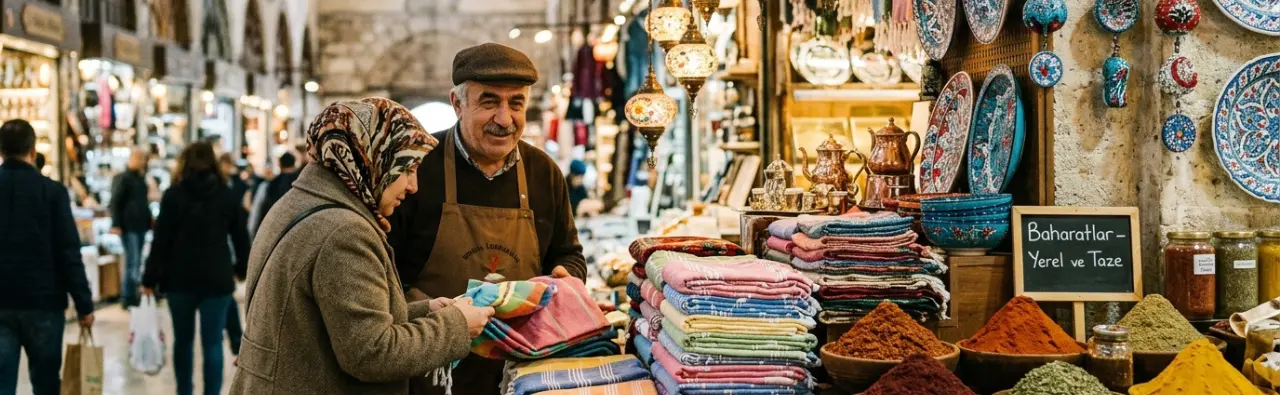
While the Grand Bazaar and Spice Bazaar are Istanbul’s most famous markets, locals themselves tend to shop at neighborhood markets like Kadıköy’s Tuesday market on the Asian side and Fatih’s Wednesday market (Çarşamba Pazarı) near the historic district. These markets offer fresh produce, secondhand goods, and everyday essentials at local prices, with a far more authentic, less touristy atmosphere than the famous covered bazaars.
If you’ve already covered the Grand Bazaar and Spice Bazaar, or simply want a shopping experience closer to how residents actually live, Istanbul’s neighborhood markets are worth the detour. Here’s where locals go, and what to expect if you decide to join them.
Where Do Locals Actually Shop in Istanbul?
Locals mostly shop at weekly neighborhood markets (semt pazarları) scattered across the city open-air, produce-heavy markets that run on a fixed day each week, rather than the daily tourist-facing bazaars in Sultanahmet.
These markets aren’t secret, but they’re rarely built into standard tourist itineraries because they operate on specific weekdays and sit outside the historic core most first-time visitors stick to. That’s exactly what makes them worth knowing about if you want a genuinely local shopping experience.
Kadıköy Tuesday Market: Istanbul’s Local Favorite
Kadıköy’s Salı Pazarı (“Tuesday Market”) on Istanbul’s Asian side is one of the city’s largest and most popular weekly markets, known for fresh produce, textiles, and secondhand finds at prices well below what you’d see in the tourist bazaars.
Set up weekly in the Kadıköy district, this market draws a mix of locals doing their weekly grocery run and visitors curious about everyday Istanbul life. Expect stalls piled with fruits and vegetables, olives, cheeses, spices, and household goods, alongside sections for clothing and secondhand items. Unlike the Grand Bazaar, there’s little pressure or performance in the sales pitch, it’s simply how the neighborhood shops.
Fatih Wednesday Market (Çarşamba Pazarı)
The Fatih Wednesday Market, held weekly around the historic Fatih Mosque, is one of Istanbul’s oldest and largest local markets, spreading across dozens of streets with everything from fresh produce to household goods and clothing.
This market has been running for generations and remains overwhelmingly local, the streets around Fatih Mosque close to traffic for the day, and stalls stretch through the neighborhood. It’s a genuinely different energy from the Grand Bazaar: fewer English-speaking vendors, no bargaining theater aimed at tourists, and prices reflecting what residents actually pay.
Istanbul’s Flea Markets and Vintage Finds
Istanbul’s flea markets often found within larger local bazaars like Kadıköy’s are a good source for antiques, vintage items, and secondhand goods you won’t find in the curated tourist shops.
Sections of neighborhood markets frequently include stalls dedicated to older furniture, vinyl records, vintage clothing, and household antiques. These sections reward slow browsing and patient bargaining, and they’re a favorite among visitors looking for something more distinctive than standard souvenirs.
How Local Markets Differ from the Grand Bazaar and Spice Bazaar
Local markets focus on everyday goods (produce, household items, clothing) at local prices, while the Grand Bazaar and Spice Bazaar are curated for higher-value tourist purchases like carpets, jewelry, ceramics, and spices packaged for travelers.
If you’re after authentic Turkish souvenirs, carpets, or Lokum (Turkish delight) as gifts, the Grand Bazaar and Spice Bazaar remain the better choice. That’s exactly what FlyDunya’s guide to the best markets to visit in Istanbul covers in detail. If you’re more interested in seeing how Istanbul actually shops day to day, or hunting for vintage finds and fresh produce, the neighborhood markets are the better fit.
Should You Visit Local Markets or Stick to the Tourist Bazaars?
Ideally, both the Grand Bazaar and Spice Bazaar for souvenirs and gifts, and a local market like Kadıköy or Fatih for a more authentic slice of the city, if your schedule allows for both.
If you’re short on time, a guided tour covering the historic Sultanahmet district including the Grand Bazaar is the more efficient choice, since it pairs shopping with major landmarks like the Blue Mosque, Hagia Sophia, and Topkapi Palace in a single organized day. FlyDunya’s one-day Istanbul itinerary covers exactly this route. Local neighborhood markets, on the other hand, are better suited to travelers with a spare afternoon and no fixed schedule, since they run on specific weekdays and reward unhurried exploring.
Tips for Visiting Like a Local
Go early, carry cash, expect minimal English, and treat bargaining as a normal part of shopping rather than a performance. Local markets operate very differently from tourist-facing bazaars.
- Carry Turkish Lira: Card payments are far less common at neighborhood stalls
- Arrive early: The best produce and secondhand finds go quickly
- Don’t expect much English: A few basic Turkish phrases go a long way
- Bargain normally, not aggressively: Prices are already close to local rates, so expect smaller, more genuine negotiation than in tourist bazaars
- Watch your belongings: Like any crowded market, stay aware in tight spaces
Frequently Asked Questions
Where do locals shop in Istanbul?
Locals primarily shop at weekly neighborhood markets (semt pazarları) such as Kadıköy’s Tuesday market and Fatih’s Wednesday market, rather than the tourist-focused Grand Bazaar.
What day is the Kadıköy market held?
Kadıköy’s main market, known as Salı Pazarı, is held on Tuesdays on Istanbul’s Asian side.
What day is the Fatih Wednesday market held?
As the name suggests, it’s held every Wednesday around the historic Fatih Mosque district.
Are local markets in Istanbul safe for tourists?
Yes, local markets are generally safe, though standard precautions apply: keep valuables secure and stay aware in crowded areas, just as you would at any busy market.
Can I bargain at local Istanbul markets like the Grand Bazaar?
Yes, but expect smaller, more genuine negotiation, since prices at local markets already reflect what residents pay rather than tourist markups.
Are local markets cheaper than the Grand Bazaar?
Generally yes, especially for everyday goods like produce, clothing, and household items, since local markets aren’t priced for tourist purchasing power.