Morocco has a way of showing up on everyone’s travel list at some point: the medinas, the Sahara, the mountains, the food. But a lot of first-time visitors arrive with a mental picture that’s slightly off from reality, which can make the first day or two more confusing than it needs to be.
Before we get into specifics, here are the Morocco travel tips that actually matter for a first visit:
- Canadians don’t need a visa for stays under 90 days
- The local currency can’t be exchanged outside Morocco, so plan accordingly
- Spring and fall are generally the best times to go
- Dress modestly, but it’s not as strict as people assume
- The medinas are confusing on purpose, not a sign you’re lost
Let’s go through each of these properly.
Things First-Timers Often Get Wrong About Morocco
A few assumptions tend to catch people off guard, so let’s clear them up before anything else.
“I’ll need a visa.” Not if you’re Canadian, for stays under 90 days. More on this below.
“It’ll be dangerous or overwhelming.” Morocco is a well-established tourist destination with millions of visitors a year. Like any busy city anywhere, stay aware of your surroundings — but the “scary” reputation is mostly overblown.
“Everyone will try to scam me.” Haggling is normal in markets; it’s not a scam, it’s just how prices work there. Fixed-price shops exist too, if that’s not your thing.
“I need to cover up head to toe.” Modesty is appreciated, especially outside major cities, but you won’t be stopped for showing your arms in Marrakech or Casablanca. More on dress code further down.
Visa & Entry: What Canadians Actually Need
Here’s the good news: Canadian passport holders don’t need a visa for tourist stays of up to 90 days in Morocco. That’s it, no advance application, no embassy visit.
What you do need:
- A valid passport (ideally with at least 6 months of validity remaining)
- Proof of onward or return travel, which can be requested at immigration
- Basic accommodation details, just in case you’re asked
That’s genuinely most of it. Morocco is one of the more straightforward destinations for Canadian travelers in terms of paperwork.
Money: How Moroccan Dirhams Actually Work
This is the part that surprises people most. The Moroccan dirham (MAD) is a closed currency , meaning you can’t buy it before you arrive, and you’re not allowed to take it out of the country when you leave.
Here’s what that means practically:
- Exchange money after you land, at the airport, a bank, or an official exchange office
- ATMs are widely available in cities and accept most international cards
- Only exchange what you’ll realistically spend, since converting leftover dirhams back at the airport requires proof of your original exchange
- Credit cards work in larger hotels and shops, but cash is still king in markets and smaller towns
Best Time to Travel to Morocco
If you’re wondering about the best month to travel to Morocco, it really comes down to what kind of trip you’re planning.
- Spring (March–May): Generally considered the best time to travel to Morocco warm days, cool evenings, and everything from the coast to the Atlas Mountains is comfortable
- Fall (September–November): The other strong option, with similar mild weather and slightly fewer crowds than spring
- Summer (June–August): Can get extremely hot, especially in Marrakech and the Sahara — doable, but pack accordingly and plan around the heat
- Winter (December–February): Mild in coastal cities, but genuinely cold at night in the desert and mountains worth knowing if you’re planning a Sahara trip
What to Wear and Pack
Morocco’s dress expectations are more relaxed than people assume, but a bit of awareness goes a long way, especially outside tourist-heavy areas.
- Loose, breathable layers work well, covering shoulders and knees is appreciated, particularly in smaller towns and religious sites
- A scarf or shawl is useful for both modesty and sun protection
- Comfortable walking shoes are non-negotiable, medina streets are cobbled and uneven
- Pack for temperature swings if you’re heading to the desert, since days are hot and nights get properly cold
Getting Around Once You’re There
Morocco’s cities are generally easy to navigate once you understand the basics:
- Medinas are intentionally maze-like, historically designed that way, getting a little lost is part of the experience, not a mistake
- Petit taxis are common within cities and should use a meter or an agreed price before you start moving
- Trains connect major cities like Casablanca, Rabat, Fez, and Marrakech, and are a comfortable way to cover longer distances
- Guided day trips are worth considering for specific experiences that are harder to arrange independently
One Experience Worth Booking Ahead
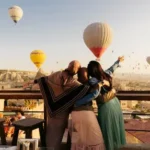
If there’s one thing worth planning before you land rather than figuring out once you’re there, it’s a sunrise hot air balloon ride over Marrakech. FlyDunya’s Marrakech hot air balloon experience includes hotel pickup, the flight over the Atlas Mountains and nearby Berber villages, and a traditional breakfast after landing, the kind of thing that fills up and is much easier to lock in ahead of time than to arrange last-minute.
Final Thoughts
Morocco rewards a bit of upfront preparation more than most destinations not because it’s complicated, but because a few details (the currency rules, the visa situation, how markets work) are different enough from home that knowing them ahead of time changes the whole experience. Once that’s sorted, the rest is just enjoying a genuinely remarkable country.
Frequently Asked Questions
Do Canadians need a visa to visit Morocco?
No, Canadian citizens can visit Morocco without a visa for tourist stays of up to 90 days.
What is the best time to travel to Morocco?
Spring (March to May) and fall (September to November) are generally considered the best times, offering warm days and comfortable evenings.
Can I exchange Moroccan dirhams before my trip?
No, the dirham is a closed currency and can only be exchanged within Morocco, either on arrival or during your stay.
Is Morocco safe for first-time travelers?
Yes, Morocco is a well-established tourist destination. Standard travel awareness applies, but it’s generally safe for visitors.
What should I wear in Morocco as a tourist?
Modest, breathable clothing covering shoulders and knees is appreciated, especially outside major cities, though dress codes are more relaxed than many first-timers expect.
Do I need cash or can I use cards in Morocco?
Both are useful; cards work in larger hotels and shops, but cash is essential for markets, smaller towns, and taxis.
What is the best month to travel to Morocco?
April and October are often highlighted as particularly good months, sitting right in the middle of the spring and fall shoulder seasons.